
What you are replacing
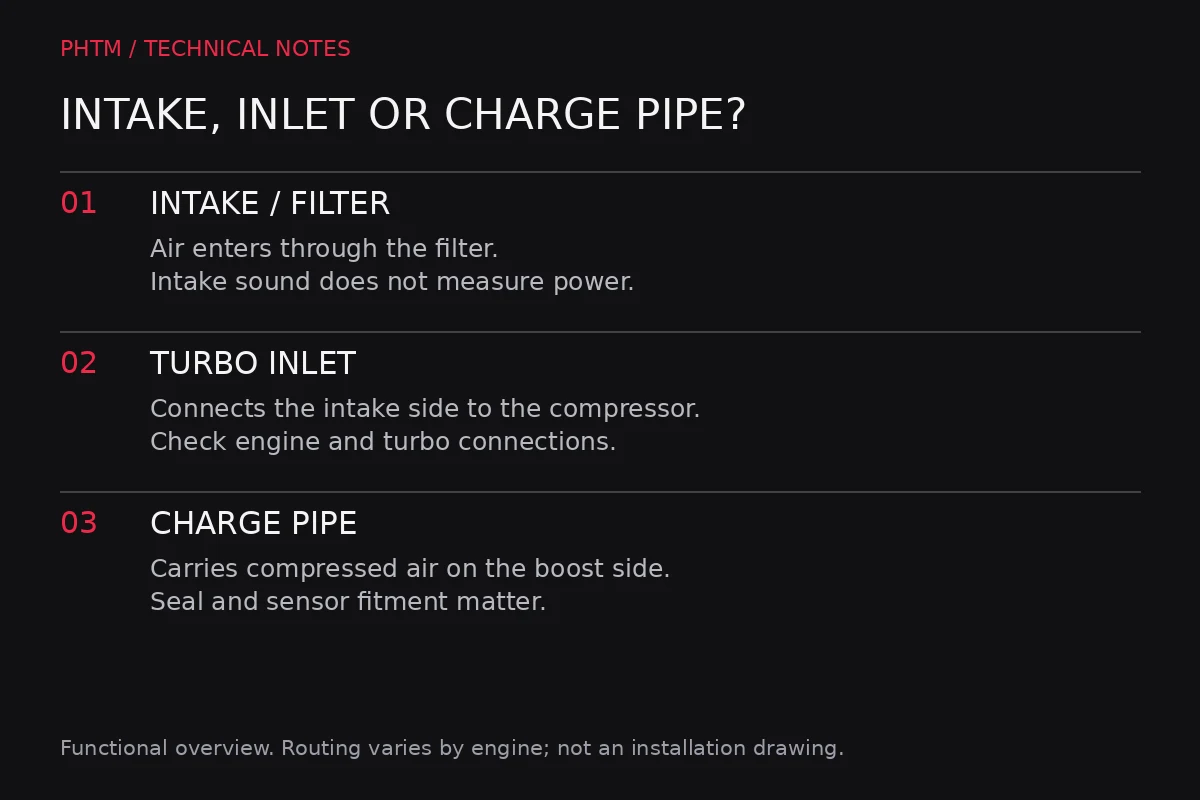
The charge pipe is on the pressurized side of the intake system. It is not the filter assembly or the pipe feeding the turbo inlet. This comparison concerns the N20/N26 F30 328i, not the N55 335i or B58 340i. Confirm the engine and exact transmission configuration; a retailer’s broad F30 year range is not enough.
The documented differences
CTS identifies its N20/N26 kit as CTS-IT-808 and describes aluminum construction with a machined connection. VRSF also specifies an aluminum pipe and machined OEM-style connection, and its order page asks you to choose a transmission/drivetrain configuration. VRSF lists a plugged injection port. A port is not a reason to add an injection system, and unused ports must remain correctly sealed. These are manufacturer specifications, not a PHTM durability test.
What matters more than the logo
Compare the current instructions and included hardware side by side. Establish which retaining clips, seals, sensor hardware and couplers transfer from the original pipe, and which are supplied new. Ask for confirmation against your car if an automatic/manual selection or xDrive note is unclear. A cheaper kit can become more expensive once missing consumables and additional labor are included. Do not assume a pipe advertised for a 328i fits a later 330i.
Stock and tuned use
A replacement may make sense when the existing pipe is damaged or as part of a verified hardware plan. It should not be sold as a guaranteed power gain on a healthy stock car. A boost-related fault also does not prove that this pipe is the cause: diagnose the leak or fault before buying. On a tuned car, follow the calibration provider’s requirements rather than assuming every aftermarket pipe is interchangeable.
Installation and buying decision
Obtain the current kit-specific instructions before disassembly. Inspect sealing surfaces and retained hardware, protect open intake passages, and verify sensor connections and hose routing before the first drive. Stop if the pipe must be forced into position. Have the completed system checked for leaks rather than using a hard pull as an installation test.
Choose the option with confirmed configuration, complete instructions, available replacement seals and useful local support. We have not established a recurring defect pattern or a controlled performance advantage for either kit. No automatic winner is justified by the evidence reviewed.
Products in this guide
Sources / references 4
- CTS: N20/N26 charge pipe CTS-IT-808 ↗Reviewed Oct 6, 2026
- VRSF: N20/N26 charge pipe configuration ↗Reviewed Oct 6, 2026
- CTS: N20/N26 turbo inlet ↗Reviewed Oct 6, 2026
- BMW: 2016 3 Series model update ↗Reviewed Oct 6, 2026
Questions about this guide?
Share your vehicle details and what you have tried. Community posts are moderated; technical answers require verification.
Related discussions → · Ask a question →